0%

Finding China’s top residential solar discounts requires more than comparing attractive numbers online. Prices can vary by city, project scale, roof conditions, financing structure, and local grid policies. A discount advertised in Shanghai may not apply to a household in Chengdu or a rural community nearby. This guide explains how to investigate Residential Community Solar Discounts using practical evidence, transparent calculations, and reliable local information.

A useful starting point is the community’s electricity profile. Review monthly bills, shared-area consumption, available rooftop space, and expected sunlight exposure. Ask whether the project uses direct purchase, leasing, energy-service payments, or a shared solar model. Each structure changes the final savings. Request written details about installation costs, maintenance duties, equipment warranties, grid connection fees, and contract cancellation terms. Small print matters.

Look for suppliers with documented projects, qualified technical teams, and clear after-sales procedures. Local energy authorities, utility announcements, property managers, and independent inspection records can help verify claims. An unusually large discount deserves careful questioning. It may exclude batteries, repairs, taxes, monitoring, or future service charges. Sometimes the cheapest offer is simply incomplete. Be cautious.

Real-world experience also reveals practical issues. Dust on panels, shaded rooftops, blocked maintenance paths, and delayed approvals can reduce expected output. A professional comparison should examine both annual savings and long-term reliability. No single discount suits every residential community. This guide may not answer every regional question, and market policies can change. However, it provides a sensible framework for comparing offers, identifying hidden costs, and choosing solar savings that remain credible after installation.
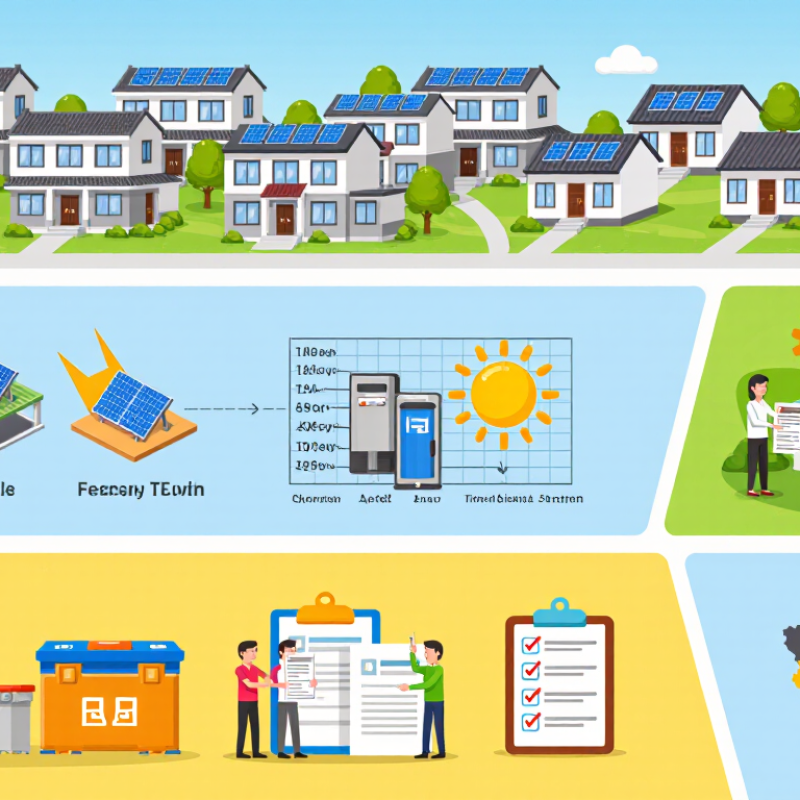
How to Find China Top Residential Community Solar Discounts?

Understanding Residential Community Solar Discounts in China

Residential community solar discounts in China usually reduce electricity costs through shared rooftop generation, not instant cash rebates. A village, apartment complex, or housing estate may divide output among participating households. Each household then receives bill credits based on its subscribed capacity and actual generation.

The National Energy Administration reported that China’s distributed photovoltaic capacity exceeded 250 GW by the end of 2023. This scale supports wider community projects, but savings differ by province, tariff category, sunlight, and maintenance quality. The IEA’s Renewables 2024 report also identified China as the largest contributor to global renewable capacity growth. Read the contract carefully.

A genuine discount should explain the electricity price, credit calculation, equipment ownership, and settlement period. Ask whether credits appear monthly or only after annual reconciliation. A practical check is simple: compare twelve months of historic bills with projected payments, including service fees and meter charges. The lowest advertised rate may not produce the lowest annual cost. Shading from nearby towers can reduce rooftop output, and estimates may be too optimistic. I would treat unclear production guarantees as a warning. Local grid rules and provincial policies must also be verified through official energy authorities. These details matter more than a headline percentage.

How to Find China Top Residential Community Solar Discounts?

Understanding Residential Community Solar Discounts in China

This scenario shows the estimated annual electricity-bill savings from different community solar discount levels. The calculation uses a reference household electricity bill of RMB 100 per month: annual savings = RMB 100 × 12 × discount rate. Actual savings depend on local electricity tariffs, household consumption, project rules, and eligibility requirements.

Reference scenario: RMB 100 monthly bill. Discount levels are calculation examples, not guaranteed commercial offers.

Identifying Eligible Solar Communities and Discount Programs

How to Find China’s Top Residential Community Solar Discounts

Identifying eligible solar communities starts with local rules, not online discount claims. The National Energy Administration reported 96.29 gigawatts of new distributed photovoltaic capacity in 2023. Residential projects contributed a significant share. This growth creates opportunities, but discount terms remain highly regional.

Check the municipal energy bureau, grid company notices, and the project’s filing record. These sources are more reliable than sales brochures.

A qualified community usually has a legally usable roof, written property consent, and an approved grid-connection plan. Ask whether the project uses shared ownership, electricity-bill credits, or fixed revenue payments.

Local incentives may reduce installation costs, reward exported electricity, or support low-income households. The exact benefit can depend on the city, project quota, roof area, and connection date.

Ask for the calculation in writing. Small details matter.

The International Energy Agency’s Renewables 2023 report shows China led global renewable capacity expansion, yet rapid growth does not guarantee a good household deal. Compare the net price, maintenance duties, contract length, and early-exit penalties. Confirm who owns the equipment after installation.

A useful field check is simple: photograph the meter, roof condition, and signed consent documents before paying. I have seen attractive estimates change after grid review. That is a warning.

Discounts should be measured against total lifetime cost, not the first advertised number.

Comparing Electricity Savings, Contract Terms, and Provider Offers

How to Find China Top Residential Community Solar Discounts?

A strong discount starts with the actual electricity bill, not the advertised percentage. China’s residential tariffs vary by province, season, and consumption tier. Compare the solar credit with your current price per kilowatt-hour. The IEA PVPS Trends 2024 report states that China added 216.9 GW of photovoltaic capacity in 2023. This growth improves competition, but it does not guarantee equal household savings. Ask whether the offer reduces every bill or only daytime consumption. A low headline discount can still be a poor deal.

Contract terms deserve equal attention. Check the agreement length, annual price increases, maintenance duties, and early-exit charges. Confirm how unused generation is handled during cloudy weeks. Some offers may include fixed service fees, which quietly reduce savings. The National Energy Administration’s 2023 statistics recorded rapid distributed solar expansion, showing why local grid capacity and settlement rules matter. Request twelve months of estimated bills, not one optimistic example. I would also compare savings under lower-than-promised generation. Real roofs are rarely perfect.

Tips: Record your monthly electricity use and peak hours. Compare at least three written offers. Calculate the total five-year payment. Verify meter ownership and repair responsibility. Ask for a performance guarantee in plain language. A contract that feels complicated may need another review. Regional policy changes can affect outcomes, so check current local rules before signing.

Checking Policies, Subsidies, Credentials, and Consumer Protections

Finding China’s top residential community solar discount starts with policy, not a banner price. The National Energy Administration reported 609.49 GW of installed solar capacity by the end of 2023. Distributed solar contributed a substantial share. However, local subsidy rules differ sharply. Some municipal incentives have expired, while others depend on grid connection dates or project ownership. Ask for the current government notice, not a sales screenshot.

Check credentials carefully. Request the installer’s registered business details, electrical qualifications, safety records, and completed project addresses. The China Photovoltaic Industry Association reported 96.29 GW of new distributed photovoltaic capacity in 2023, showing rapid expansion but also uneven service quality. A low quote may exclude roof reinforcement, meter changes, maintenance, or battery replacement. Read every line. I would compare at least three written offers, although even that may not reveal hidden assumptions.

Consumer protection belongs in the contract. Require clear ownership of panels, payment schedules, estimated annual generation, degradation limits, maintenance duties, and warranty procedures. The International Energy Agency’s Renewables 2024 report says China led global renewable capacity expansion in 2023, but market growth does not guarantee household-level fairness. Confirm the project’s grid-connection status with the local utility. Keep copies of invoices and inspection records. Be cautious with guaranteed savings. Weather is not predictable. Neither is every subsidy.

Applying for a Suitable Community Solar Discount Step by Step

Finding a suitable community solar discount in China begins with local verification.
I check whether the project serves my city, village, or residential compound. A discount is useful only when the service area, billing method, and contract terms match my home. I record my average monthly electricity use from the last twelve bills. Paper trails help. Then I compare the advertised reduction with actual kilowatt-hour charges, service fees, and possible deposits.

The application may require identity details, address proof, meter information, and consent from the property manager or household owner. I ask for a written calculation covering expected generation, discount rate, payment date, contract length, and cancellation process. Clear answers matter more than a dramatic percentage. A qualified solar consultant should explain seasonal output, shared-site limits, maintenance duties, and grid outage arrangements. I also verify project registration, safety inspections, permits, and complaint channels through official local energy or utility sources.

Before signing, I test the offer against a winter month and a rainy summer month. Use a calculator. The numbers may be less attractive than the headline. That is worth noticing. I keep screenshots, receipts, and signed documents in one folder. After approval, I compare the first bill with the promised formula and report discrepancies promptly. My review is not perfect; I once overlooked a small management fee while focusing on the discount rate. A second reader can catch that mistake.

FAQS

What should I compare before choosing a residential solar discount?

Compare the actual electricity price per kilowatt-hour with the solar credit. Check service fees, deposits, and possible price increases. A large advertised percentage may still produce small savings. Paper trails help.

Why do electricity tariffs matter?

Residential electricity prices can vary by province, season, and consumption tier. A discount may reduce only certain usage periods. Ask whether it applies to the full bill or daytime consumption. Your current bill is the better starting point.

How long should I review the contract?

Check the contract length, annual increases, maintenance duties, and early-exit charges. Ask how unused generation is handled during cloudy weeks. Confirm whether fixed management fees reduce the expected savings. Small fees matter.

How can I test whether the savings are realistic?

Request estimated bills for twelve months. Test the offer with a winter month and a rainy summer month. Also calculate savings under lower-than-promised generation. Real roofs are rarely perfect.

What information may be needed for an application?

The application may request identity details, address proof, and meter information. It may also require household-owner or property-manager consent. Keep copies of every submitted document. Screenshots can help.

What project details should I verify?

Confirm that the project serves your city, village, or residential compound. Check registration, safety inspections, permits, and complaint channels through official local sources. Verify the billing method and grid-outage arrangements. Local rules matter.

What should a written offer explain?

It should state expected generation, the discount rate, payment dates, and contract length. It should also explain cancellation, maintenance, shared-site limits, and performance guarantees. Clear wording matters more than dramatic percentages. Read the difficult parts twice.

How should I check the first bill?

Compare the first bill with the promised calculation formula. Review the electricity charge, service fee, discount, and payment date. Report discrepancies promptly and keep receipts in one folder. I once missed a small management fee.

Conclusion

Finding the best Residential Community Solar Discounts in China begins with understanding how shared solar projects work and how their savings are distributed among participating households. Consumers should identify eligible residential solar communities, review available discount programs, and compare expected electricity savings with subscription fees, contract length, payment rules, and cancellation conditions. A careful comparison can reveal whether an offer provides meaningful long-term value rather than only a short-term reduction.

Before applying, applicants should verify local policies, subsidy requirements, project approvals, provider qualifications, equipment standards, and consumer protection measures. It is also important to request clear documentation explaining billing, maintenance responsibilities, performance expectations, and dispute-resolution procedures. A suitable discount can then be selected by confirming eligibility, submitting the required household and electricity-use information, reviewing the agreement in detail, and keeping copies of all records. This practical approach helps households make informed decisions and participate in community solar with greater financial clarity and confidence.

Oliver

Oliver

Oliver is a seasoned marketing professional with a wealth of experience in driving brand success through innovative strategies and compelling content. With a deep understanding of our company’s products and services, he consistently translates complex concepts into engaging blog articles that not......