Energy Savings Knowledge Hub
Explore expert articles, market trends, and practical strategies to reduce gas, electricity, and solar costs for your home or business.
Utility Bill Audit Services help organizations test whether invoices match their actual utility accounts, contract terms, and meter data. The work may uncover duplicate charges, incorrect rates, missed tax exemptions, or billing periods that do not align with operations. A careful review starts with evidence: recent bills, service agreements, meter records, and clear documentation of each adjustment. Small discrepancies matter. Across dozens of sites, a few dollars on one invoice can point to a recurring issue.
Energy-efficiency expert Amory Lovins is often credited with the line, “The cheapest energy is the energy you don’t use.” That idea connects naturally to bill audits: understanding consumption and charges can reveal where closer operational attention may help. This guide examines leading providers and the practical differences buyers should compare, including utility coverage, audit methods, savings validation, reporting detail, and fees. Look for firms that explain their findings plainly and distinguish verified recoveries from projected savings. Ask how they handle disputed charges and whether clients can review the supporting records.
Still, an audit is not magic. Results depend on data quality, account complexity, and the provider’s ability to follow issues through. A polished dashboard alone proves little. The strongest choice is usually the provider whose process fits an organization’s locations, internal staff, and reporting needs—not simply the one promising the largest recovery. This comparison offers a starting point, while leaving room for questions that buyers should verify before signing.
Utility Bill Audit Services in China: Scope and Purpose
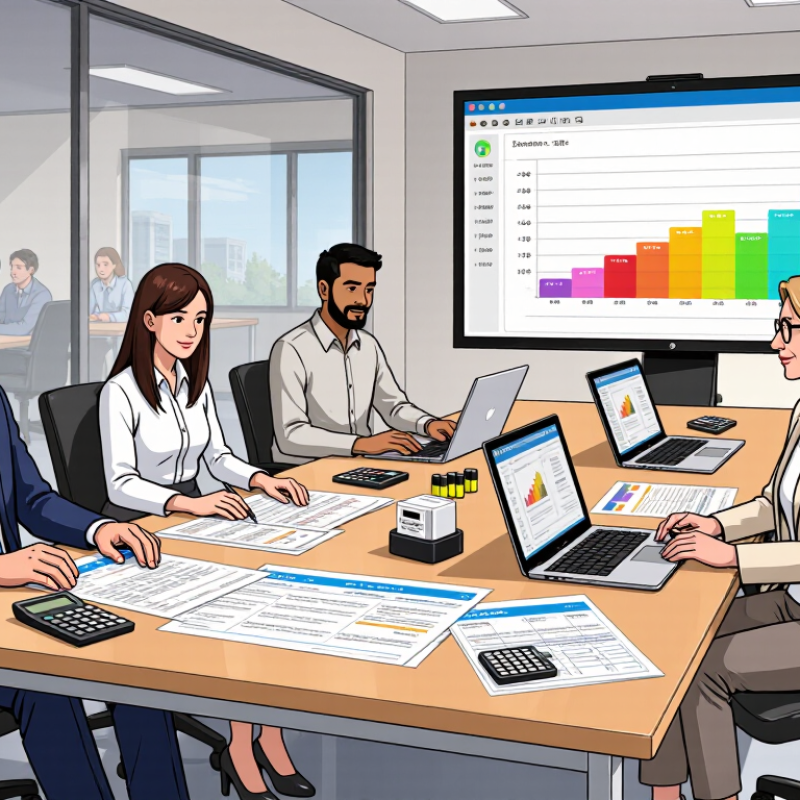
China’s utility bill audits examine more than the final amount due. They compare electricity and gas invoices with meter readings, tariff schedules, contract terms, and operating records. Auditors may check peak-demand charges, time-of-use rates, power-factor adjustments, taxes, and unusual month-to-month changes. A practical review might trace one factory’s demand charge back to its 15-minute load records. Small discrepancies can recur across multiple sites.
The scale makes careful checks worthwhile. The China Electricity Council reported national electricity consumption of 9.22 trillion kWh in 2023, a 6.7% increase from 2022, in its annual power-industry statistics. For large energy users, an audit can identify billing errors, missed tariff options, and weak controls over account data. It can also flag bills that match the meter but conflict with actual operating patterns. That distinction matters. A tidy spreadsheet is not proof of a correct bill. Audit findings should be supported by source documents, transparent calculations, and a clear record of follow-up; estimates deserve particular scrutiny.
China Utility Bill Audit Services: Scope and Purpose
The table summarizes common service-provider capabilities, not a ranking of named companies. Available checks and applicable charges vary by location, utility, contract, and customer account.
| Service Category | Typical Audit Scope | Purpose | Common Records Reviewed | Typical Deliverables |
|---|---|---|---|---|
| Electricity bills | Review billed consumption, meter readings, tariff classification, time-of-use periods where applicable, demand charges where applicable, contract terms, and arithmetic or duplicate-charge issues. | Identify billing discrepancies, improve account and tariff accuracy, and support energy-cost management. | Electricity invoices, meter data, account records, supply contracts, tariff information, and site operating data. | Exception report, supporting calculations, corrected account or invoice recommendations, and an energy-cost summary. |
| Natural gas bills | Compare billed volume and measurement units with meter records; check applicable rates, billing periods, adjustments, and contract terms. | Check that billed usage and charges are consistent with available records and the applicable supply arrangement. | Gas invoices, meter readings, supply contracts, account details, and relevant operating records. | Usage and charge reconciliation, identified exceptions, and documentation for follow-up with the supplier. |
| Water and wastewater bills | Review recorded consumption, meter readings, billing periods, applicable water and wastewater charges, and any stated adjustment or fee. | Detect unusual consumption patterns or possible billing and account discrepancies. | Water invoices, meter readings, site records, account information, and applicable local billing schedules. | Consumption trend analysis, exception list, and recommended verification or account updates. |
| District heating, where available | Check billed heating consumption or allocation, metering or apportionment records, billing periods, and contract or service terms. | Validate heating charges against available measurement and allocation records. | Heating bills, meter or allocation statements, service agreements, and building or site records. | Charge and allocation review, documented discrepancies, and questions for the service provider or property manager. |
| Multi-site utility portfolio review | Consolidate electricity, gas, water, and other in-scope utility accounts; check account completeness, invoice consistency, duplicate records, and cross-site usage patterns. | Give organizations a consistent view of utility spending and help prioritize account corrections and further investigation. | Invoices, account lists, site details, contracts, meter data, and available payment records. | Centralized account register, spend and usage summaries, exception log, and action-tracking schedule. |
| Telecommunications expense review, if included | Review service inventories, recurring charges, billing periods, contracted rates, and charges against available service or usage records. | Check telecom expenses and account records; this is commonly treated as a separate expense-audit scope from energy and water utilities. | Telecom invoices, service inventory, contracts, account records, and available usage statements. | Service and charge reconciliation, exception list, and account-cleanup recommendations. |
FAQS
It should review electricity, gas, and water charges in China. Ask about meter readings, billing periods, tariff categories, and demand charges. Details matter.
Ask the provider to trace a sample invoice to its meter readings and tariff details. Request calculations that your team can verify, not only a savings percentage.
Request a report with customer details removed. It should show invoice lines, calculations, confirmed errors, and possible savings separately. Small checks matter.
Providers may need recent bills, meter logs, and operating schedules. Ask what records are necessary before sharing a full year of invoices.
Define the sites and billing months covered, the baseline, fees, and responsibility for disputed findings. Explain how savings are measured when tariffs or operating hours change.
Ask who can access uploaded bills, how files are encrypted, and when records are deleted. Request a named security contact and a sample incident process.
Not necessarily. Test the process with a small set of bills first. It may feel slow, but it can reveal access or workflow gaps early.
Be cautious of guarantees without written assumptions. Tariffs and usage can change, and incomplete records can leave important questions unanswered. I would still double-check the context.
Conclusion
Utility Bill Audit Services in China help businesses examine electricity, water, gas, and other utility expenses to identify billing errors, unusual usage patterns, and opportunities to improve cost control. An audit may compare invoices with contracts, meter readings, tariff schedules, and historical consumption, while checking for duplicate charges, incorrect rates, estimated readings, or inconsistencies between recorded usage and operations.
When evaluating service providers, organizations can consider relevant experience, audit methods, reporting clarity, industry knowledge, and the ability to support follow-up corrections. Rather than relying on rankings alone, businesses should verify a provider’s references and scope of work, clarify fees, timelines, and responsibilities in the contract, and establish safeguards for invoices, meter data, and other sensitive information. A careful selection process can make audit findings easier to validate and turn into practical improvements.

Lydia
Contact Us
Ready to start saving? Reach out to our team for a free, no-obligation energy audit and custom savings proposal.