
0%

Laundromat Utility Cost Optimization is the disciplined process of reducing water, electricity, gas, and wastewater expenses without weakening customer service. In a busy store, utility waste often hides in ordinary details. A leaking washer may drip overnight. An aging dryer may run for ten extra minutes. Poorly calibrated water levels can quietly increase monthly bills. These small losses become significant across dozens of machines and hundreds of cycles.

Brian Wallace, a longtime coin-laundry industry educator, has said, “A laundromat is a utility-intensive business, so efficiency directly affects profitability.” His observation captures the practical reality behind this topic. Owners need more than lower bills. They need dependable equipment, accurate utility records, and operating decisions based on evidence. Comparing monthly usage with machine turns can reveal unusual patterns. Checking dryer exhaust airflow can expose heat loss. Reviewing peak electricity periods may identify avoidable demand charges.

The strongest approach combines maintenance, equipment upgrades, staff habits, and customer guidance. High-efficiency washers can reduce water consumption. Moisture sensors can prevent unnecessary dryer time. LED lighting and smart controls can lower background demand. Yet efficiency is not automatic. An efficient machine still wastes resources when overloaded, poorly maintained, or used during inefficient operating periods.

Some savings look obvious. Others do not. Utility data can also be incomplete, seasonal, or misunderstood. That uncertainty deserves attention. A reliable optimization plan tests one change, measures the result, and adjusts when reality disagrees with expectations. This article explores those practical methods and the difficult decisions behind sustainable laundromat cost control.
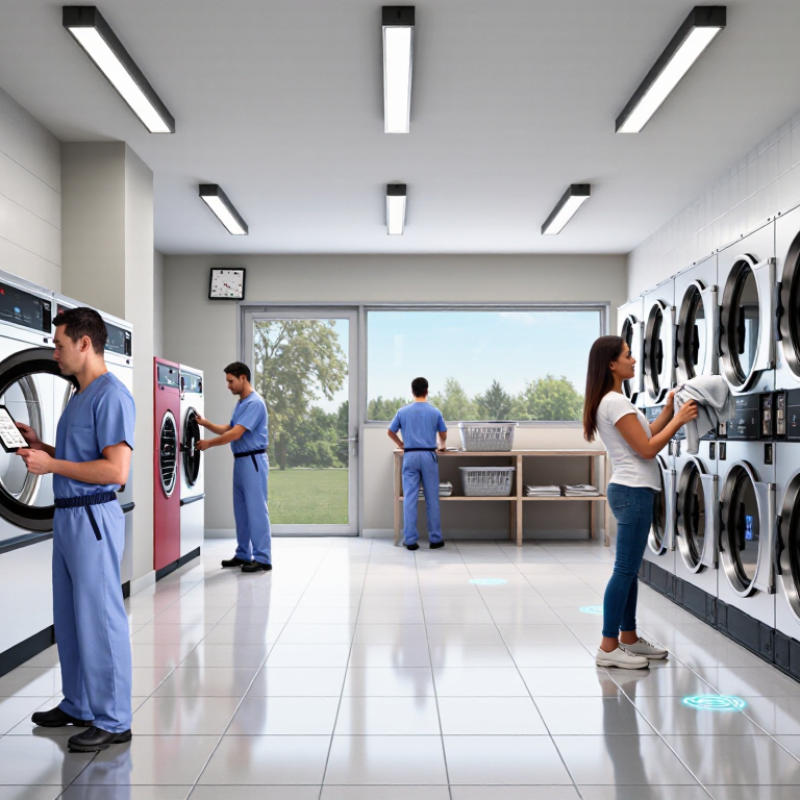
What Is Laundromat Utility Cost Optimization?

Definition and Scope of Laundromat Utility Cost Optimization

What Is Laundromat Utility Cost Optimization?

Definition and Scope of Laundromat Utility Cost Optimization

Laundromat utility cost optimization means reducing water, electricity, gas, and heating expenses without weakening cleaning performance. It is a practical management process, not a single equipment purchase. The scope includes machines, water systems, lighting, ventilation, operating schedules, maintenance, and utility billing.

An experienced operator begins with reliable measurements. Record meter readings weekly, then compare them with machine usage and opening hours. Check water temperature, cycle length, drying time, and standby consumption. A small leak behind a washer can waste substantial water before anyone notices. Blocked ventilation can also extend drying cycles and increase energy demand. Utility tariffs matter too. Some facilities may reduce expenses by shifting selected operations away from expensive billing periods, where permitted.

Optimization should protect customers, staff, and equipment. Lowering water levels too aggressively may leave clothes poorly cleaned. Reducing dryer heat may create longer queues and more complaints. I have seen spreadsheets suggest savings that disappeared after seasonal demand changed. That is why operators should test one adjustment at a time and review results for several weeks. Cost comparisons should include repairs, equipment life, labor, and customer experience. A basic audit may reveal that maintenance delivers better value than immediate replacement. Local safety requirements and utility rules must guide every change.

Key Utility Expenses in Laundromat Operations

What Is Laundromat Utility Cost Optimization?

Key Utility Expenses in Laundromat Operations

Utility costs often decide whether a laundromat feels profitable or constantly strained. Water, electricity, gas, sewer charges, and waste removal can consume a large share of monthly revenue. Each expense deserves separate tracking. A single combined bill can hide expensive equipment or avoidable leaks. Keep it practical.

Water usage rises quickly when washers run inefficiently or plumbing leaks behind walls. Sewer charges may follow water consumption, depending on local billing rules. Electricity powers washers, dryers, lighting, ventilation, payment systems, and heating or cooling equipment. Dryers can become major energy users when filters stay clogged or airflow weakens. Gas-fired dryers create another cost category, especially during busy evening hours. Check meter readings against machine cycles, not only against last month’s invoice.

Reliable optimization usually begins with simple records. Log utility bills, operating hours, weather conditions, and machine counts. Compare similar weekdays instead of relying on monthly averages. A sudden increase may indicate a leak, a faulty thermostat, poor dryer airflow, or unusual customer demand. Some efficiency upgrades look attractive but recover their cost slowly. That deserves honest review. Replacing every machine immediately may create financial pressure, even when newer models promise lower consumption. Regular maintenance, accurate load settings, full washer use, and scheduled filter cleaning often provide cheaper improvements. Staff training matters too. One incorrect water level or repeated empty dryer cycle can quietly increase expenses. Errors happen. The important part is finding them before they become normal.

What Is Laundromat Utility Cost Optimization? - Key Utility Expenses in Laundromat Operations
Utility Expense Main Cost Driver Illustrative Monthly Usage Planning Rate Estimated Monthly Cost Operational Impact Cost Optimization Measures
Water Supply Washer cycles and water consumption per cycle 86,400 gallons
Based on 4,800 wash cycles and 18 gallons per cycle
$0.006 per gallon $518 Higher water use increases both the direct water bill and the amount of wastewater generated. Use high-efficiency washers, check inlet valves, repair leaks promptly, and track gallons per wash cycle.
Wastewater and Sewer Water discharged from washers 86,400 gallons $0.006 per gallon $518 Sewer charges can equal or exceed the water-supply charge in some service areas. Reduce overfilling, select efficient wash programs, and verify that sewer billing reflects actual metered usage where available.
Electricity for Washers Motor operation, controls, pumps, and hot-water support equipment 1,200 kWh
Based on 4,800 wash cycles and 0.25 kWh per cycle
$0.16 per kWh $192 Electrical consumption rises with cycle volume, inefficient motors, and unnecessary standby operation. Maintain motors and pumps, use programmable controls, and schedule nonessential equipment outside peak demand periods.
Natural Gas for Dryers Dryer operating time, load size, moisture removal, and gas efficiency 1,344 therms
Based on 3,840 drying cycles and 0.35 therm per cycle
$1.20 per therm $1,613 Dryers are often one of the largest utility expenses, especially when loads are underfilled or drying times are excessive. Clean lint screens and exhaust ducts, inspect airflow, calibrate temperature controls, and use moisture-sensing technology where suitable.
Electric Dryers — Alternative Scenario Dryer cycle duration and electricity consumption 17,280 kWh
Based on 3,840 drying cycles and 4.5 kWh per cycle
$0.16 per kWh $2,765 This scenario applies to electric dryers and should not be added to the natural-gas dryer estimate. Compare energy cost by dryer type, reduce over-drying, maintain airflow, and evaluate local electricity and gas tariffs before equipment replacement.
Lighting Operating hours, fixture quantity, and lamp efficiency 1,440 kWh
Based on 4.0 kW of connected lighting operating 12 hours daily
$0.16 per kWh $230 Lighting operates for long periods and affects both electricity consumption and customer comfort. Install LED fixtures, use occupancy or daylight controls in suitable areas, and keep fixtures and lenses clean.
Heating, Ventilation, and Air Conditioning Building size, outdoor temperature, dryer heat, ventilation, and thermostat settings 2,400 kWh equivalent monthly estimate $0.16 per kWh equivalent $384 Poor ventilation can increase cooling demand, reduce dryer efficiency, and create uncomfortable indoor conditions. Balance make-up air, seal ductwork, clean filters and coils, use efficient thermostats, and prevent conditioned-air loss.
Peak Demand Charges Maximum electricity load during the billing period 25 kW monthly peak demand $15 per kW $375 Simultaneous operation of dryers, HVAC systems, water heaters, and other equipment can raise the demand portion of the bill. Stagger high-load equipment, use load-management controls, and review the applicable commercial rate schedule.
Hot-Water Heating Water temperature, hot-water volume, heater efficiency, and fuel source Approximately 43,200 gallons heated monthly
Assumes half of washer water is hot or warm
Varies by fuel and local tariff $350–$650 Hot-water demand can materially increase gas or electricity consumption, particularly during high-volume periods. Insulate hot-water pipes, repair mixing valves, maintain burners or heating elements, and avoid unnecessarily high temperature settings.
Benchmark note: The figures above are an illustrative planning model for a laundromat operating 30 days per month with approximately 40 washers, 32 dryers, four turns per machine per day, and a blended electricity rate of $0.16 per kWh. Actual costs vary by equipment efficiency, utility tariff, climate, local water and sewer rates, operating hours, and customer demand. The natural-gas dryer and electric-dryer figures represent alternative equipment scenarios and should not be combined.

Methods for Measuring Water, Gas, and Electricity Usage

Laundromat utility cost optimization starts with measurement, not guesswork. Install submeters on washers, water heaters, dryers, and major electrical panels. Record water volume, gas consumption, electricity, machine cycles, and operating hours daily. A simple spreadsheet can reveal unusual patterns, such as water use rising after closing. The U.S. Environmental Protection Agency reports that leaks waste nearly one trillion gallons of water annually across the country. Even a small dripping valve deserves attention.

Water measurement should connect gallons to production. Divide total water use by completed wash cycles or pounds processed. Compare the result across machine types and busy periods. The U.S. EPA WaterSense program states that certified commercial clothes washers use at least 20% less energy and 30% less water than standard models. However, posted specifications may not match real performance. Customer loading habits, rinse settings, and maintenance change the result. Our first audit would probably contain errors. Meter readings, invoices, and machine counts may not align.

For gas dryers and water heating, track therms per operating hour and compare them with temperature settings, drying time, and ventilation conditions. For electricity, calculate kilowatt-hours per cycle and examine demand peaks. The U.S. Energy Information Administration publishes commercial electricity price data that can convert usage into local cost estimates. Do not rely on monthly bills alone. They hide daily waste. A loose dryer duct, a failing hot-water valve, or nighttime standby loads can quietly increase costs. Small meters help locate the problem. That evidence supports better maintenance decisions.

Strategies for Reducing Laundromat Utility Costs

Utility costs can quietly erode a laundromat’s margin. The U.S. Energy Information Administration’s 2018 Commercial Buildings Energy Consumption Survey assigns about 7% of commercial energy use to water heating. In a laundry, that share can be higher because every wash cycle demands heated water.

Measure each machine’s gallons, cycle time, and hot-water temperature. EPA’s WaterSense at Work guidance recommends tracking water use per load and repairing leaks quickly. A dripping valve may seem minor. It is not. Install flow meters on supply lines, inspect hoses weekly, and compare meter readings with washer counts. Unusual differences often reveal leaks, overfilling, or unrecorded cycles.

Lower temperatures where fabric care allows. Efficient washers, shorter rinse programs, and properly sized water heaters can reduce both water and gas consumption. The U.S. Department of Energy’s Better Buildings resources emphasize controls, maintenance, and operational tracking as practical energy-saving measures. Use automatic shutoff settings, clean dryer airflow paths, and replace damaged door seals. Small details matter.

Pricing also deserves attention. Review electricity and gas bills against busy hours, not just monthly totals. Demand charges can punish a crowded evening schedule. Moving some cycles to lower-rate periods may help, but customer habits can resist change. That is where planning becomes imperfect. Test one adjustment for four weeks, record complaints, utility use, and revenue, then revise the plan. A cheaper cycle is not successful if customers avoid it.

Evaluating Savings, Efficiency, and Long-Term Results

Laundromat utility cost optimization means reducing water, electricity, and gas waste without weakening customer service. The real test is long-term performance, not one cheap monthly bill. The U.S. Department of Energy identifies water heating as a major commercial energy expense, making hot-water control especially important for laundromats. Small temperature reductions, insulated pipes, and scheduled maintenance can protect savings.

Efficiency should be measured per completed wash, not by total utility spending alone. A busy store may spend more overall while operating more efficiently. ENERGY STAR data shows certified commercial clothes washers can reduce water and energy use compared with standard equipment. The exact savings depend on machine age, cycle settings, incoming water temperature, and customer habits. I have found that operators often overestimate equipment savings. Usage records can reveal a less comfortable truth.

Tips: Track gallons, kilowatt-hours, and gas use each month. Compare those figures with total loads. Check for dripping valves, slow leaks, clogged filters, and overheated dryers. Review utility bills after every repair. Install submeters where possible. A simple spreadsheet is enough. The U.S. Environmental Protection Agency reports that household leaks waste significant water nationwide, and commercial laundry leaks can remain unnoticed for weeks. Savings should be tested over seasons, because winter heating demand can distort results. Keep a maintenance log, but question every assumption.

FAQS

What does laundromat utility cost optimization mean?

It means reducing water, electricity, gas, and heating costs without weakening cleaning performance. It includes machines, lighting, ventilation, schedules, maintenance, and billing. It is an ongoing management process.

Which utility measurements should operators record?

Record water volume, electricity, gas, machine cycles, and opening hours. Take meter readings daily or weekly. Compare gallons and energy use with completed loads. Monthly bills alone hide daily waste.

Why are submeters useful?

Submeters show which machines or systems consume the most resources. Install them on washers, dryers, water heaters, and main electrical panels. A separate reading can reveal nighttime water use or standby electricity. Small evidence matters.

How can operators measure water efficiency?

Divide total water use by completed wash cycles or processed laundry weight. Compare results between machine types and busy periods. Check dripping valves, slow leaks, and unusual rinse settings. Our first spreadsheet may contain errors.

What problems can increase dryer energy use?

Blocked ventilation can lengthen drying cycles and raise energy demand. A loose duct may waste heat behind the machine. Track drying time, temperature settings, and gas use per operating hour. Longer queues may follow careless heat reductions.

How can hot-water costs be controlled?

Inspect hot-water valves, pipe insulation, and temperature settings. Scheduled maintenance can prevent wasted heating. Small temperature changes may save energy, but cleaning results must remain acceptable. Test changes carefully.

Should operating schedules change to reduce utility costs?

Some operations may move away from expensive billing periods, where local rules permit. Compare the possible savings with customer demand and staffing needs. A cheaper period is not always practical. Seasonal demand can mislead you.

How should long-term savings be evaluated?

Measure utility use per completed load, not total spending alone. Review results after repairs and across different seasons. Include equipment life, labor, repair costs, and customer experience. Some estimates fail.

Is replacing equipment always the best solution?

No. A leak, clogged filter, or failing valve may cause more waste than an old machine. Maintenance can provide better value than immediate replacement. Compare real readings before buying equipment.

What safety and service issues should optimization protect?

Changes should protect customers, staff, equipment, and cleaning quality. Lower water levels may leave clothes poorly cleaned. Lower dryer heat may create longer queues. Follow local safety requirements and utility rules. Perfect settings rarely exist.

Conclusion

Laundromat Utility Cost Optimization is the process of managing and reducing the water, gas, and electricity expenses required to operate a laundromat efficiently. It involves identifying major utility costs, tracking usage by machine and operating period, and comparing consumption with customer demand. Accurate measurement can be supported by utility bills, equipment readings, submeters, and regular maintenance records, helping owners recognize leaks, inefficient cycles, unusual consumption, or avoidable energy waste.

Effective strategies may include improving machine maintenance, adjusting operating schedules, reducing water loss, using efficient lighting and climate control, and training staff to follow consistent procedures. Cost reduction should not compromise cleaning performance, customer comfort, or equipment reliability. Results can be evaluated by comparing utility costs per operating hour, per load, or per unit of revenue over time. A successful plan combines immediate savings with long-term efficiency, predictable budgeting, and continuous monitoring so that improvements remain practical and sustainable.

Oliver

Oliver

Oliver is a seasoned marketing professional with a wealth of experience in driving brand success through innovative strategies and compelling content. With a deep understanding of our company’s products and services, he consistently translates complex concepts into engaging blog articles that not......